
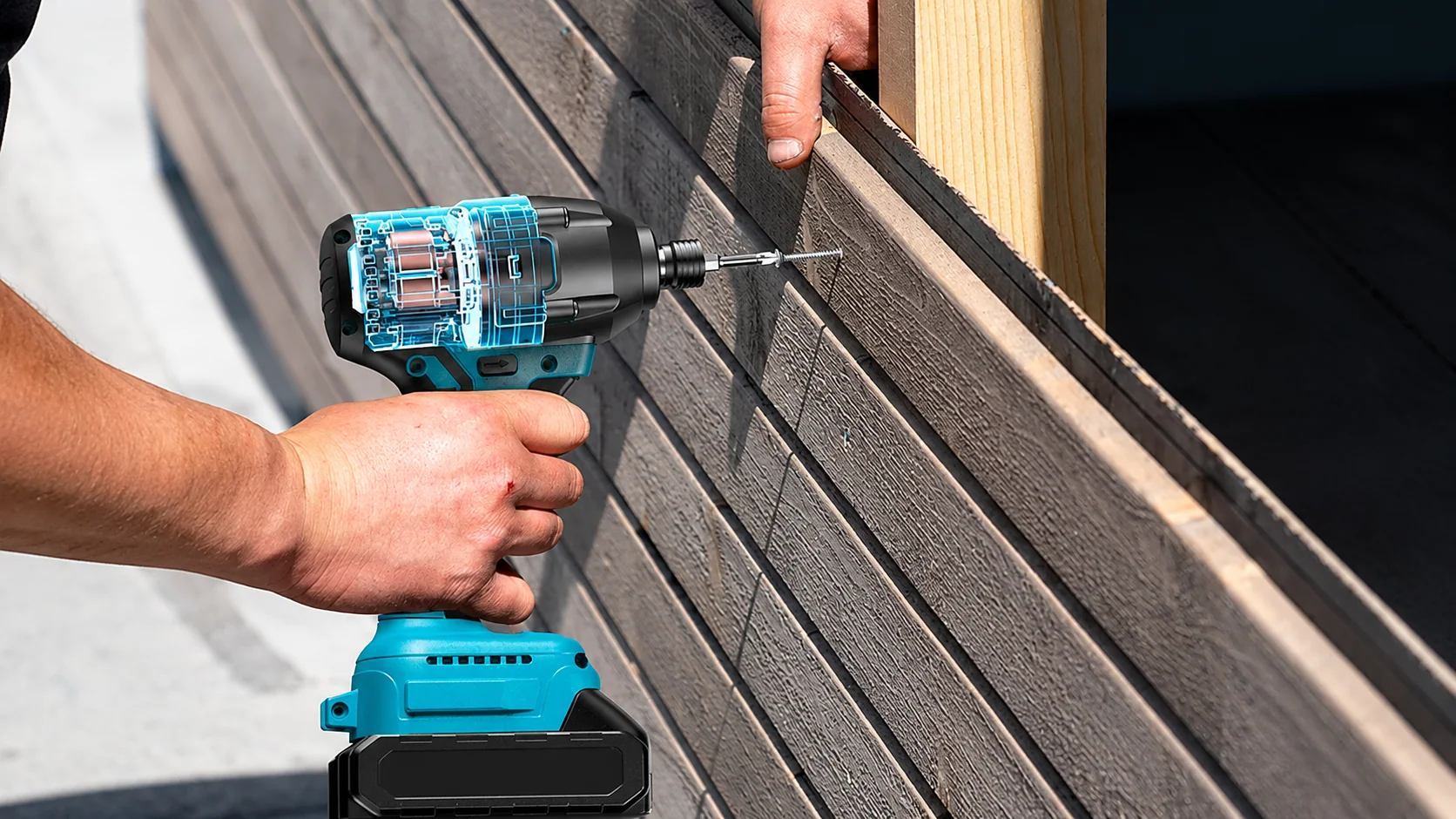

Driver bits look interchangeable, and that appearance is where most purchasing mistakes begin. The price gap between a bulk tub of budget bits and a set of industrial-grade impact bits reflects measurable differences in steel, machining, coatings, and design. A workshop that understands those differences can compare bits on cost per drive, and that figure usually favors the better bit.
The steel decides what the bit can survive
Every driver bit starts as an alloy, and the alloy determines how much load and wear the bit can survive. Chrome vanadium, often shortened to Cr-V, is the common budget option, and it performs acceptably in hand tools where torque rises gradually. The alloy name alone, though, does not settle whether a bit belongs in an impact driver. The safer guide is the tool manufacturer’s stated application and the bit’s impact rating, since bits built and rated for impact use are the ones suited to that work.
A bit hardened too far will snap under load, and a bit that is too soft will deform and round out the recess. Hardness by itself is not the goal; the bit also needs enough ductility to absorb shock without cracking. Premium bits often use S2 tool steel, a silicon alloy that balances hardness against ductility, though the grade marked on the bit tells less than the product rating and the manufacturing specification behind it.
Proprietary modified alloys sit above standard S2, and the better makers pair them with controlled heat treatments. Two bits can share the same nominal steel and behave very differently, because one was hardened and tempered under tight process control and the other was not. That process control is part of what a higher price buys. For a workshop buying in volume, start with the rating for the tool and job, then compare the available bits.
Tolerances, fit, and cam-out
Tip geometry can vary between bits. Compare how closely the tip fits the fastener recess and whether it seats fully before torque is applied. The difference appears the moment a screw resists. A loose tip rides up and out of the recess, a failure known as cam-out, and it scars the bit and the screw head together. Fastener recesses are made to published dimensional standards, so check that the bit matches the applicable drive profile and size.
The real cost of cam-out rarely shows up on a bit invoice. A stripped fastener in a finished assembly can mean drilling out, thread repair, rework, or a scrapped component. Fit and wear should be evaluated against the workshop’s actual fasteners and tools.
Fit also depends on radial play, the small amount of wobble between the bit, the holder, and the fastener head. Some play is unavoidable, but worn holders and loose shanks add to it. More play means the tip carries load unevenly, and uneven load wears the tip and the recess at the same time.
What impact-rated actually means
An impact driver doesn’t simply turn a fastener. It strikes the fastener with rapid rotational blows, and a standard bit under that treatment tends to fail at the tip or shear at the shank. Impact-rated bits are built for that specific load pattern, and the engineering behind them is visible.
Most impact designs include a torsion zone, a narrowed mid-section that flexes under peak torque. The flex absorbs part of each torque spike before the spike reaches the tip, so the tip carries a lower peak load and survives longer. A rigid bit transmits everything it receives, and a torsion zone gives some of that energy somewhere else to go.
A torsion zone only works with the right heat treatment, because one that is too hard will crack and one that is too soft will twist permanently. Getting both right adds manufacturing steps, and those steps are a legitimate part of the price. For a workshop running impact drivers all day, the cost-per-drive comparison below shows whether that premium pays for itself. A workshop driving by hand never needed to pay it.
Specialty and security profiles
A general set built around Phillips and slotted bits won’t service modern machinery for long. Industrial equipment and automotive assemblies now use Torx, Pozidriv, square, and hex drives as standard, and civil infrastructure follows the same pattern. A near-fit bit in a Torx recess will round the fastener, and proprietary fasteners are rarely cheap to replace.
Security fasteners raise the requirement further. Profiles such as post-Torx, Pentaforce, spanner, and one-way designs exist specifically to resist tampering, and they demand high-precision bits made to tight tolerances. A poorly made security bit fails twice over: it slips in a recess with a small contact area, and its own wear accelerates with every use.
A workshop sourcing Driver Bits can use supplier listings to research available profiles and compare actual specifications before buying. The practical benefit is coverage. When a technician meets an unfamiliar drive profile on site, the job continues if the right bit is already in the kit, and it stalls if it isn’t.
Coatings and surface treatments
Surface treatments add cost, and each one answers a different problem. Black oxide is the mildest option, a conversion coating that gives modest corrosion resistance at a modest price. It suits general indoor work, and it should never carry a large premium. A coated bit with a soft core will still deform, and the coating wears through long before the tip does.
Titanium nitride, usually recognized by its gold color, is a ceramic coating that raises surface hardness and lowers friction. Lower friction helps the bit seat and release cleanly, and the harder surface resists the abrasive wear that rounds tips over. In high-volume assembly, where the same bit drives fasteners continuously, that longer service life can justify the higher price.
Diamond-grit coatings take a different approach: abrasive particles at the tip bite into the recess and resist cam-out. The extra grip reduces the axial pressure an operator has to apply, and the difference is felt across a long shift. In corrosive settings, such as coastal or marine work, the priority shifts to rust resistance. A corroded bit in storage is a bit that never drives anything.
The bit is only part of the system
A precision bit paired with a worn holder loses much of its advantage. The holder is the interface between the tool and the bit, and looseness there becomes radial play at the tip. Magnetic quick-release holders vary widely in how tightly they grip a shank, and that variance shows up as vibration at the fastener.
High-retention adapters and quality chucks hold the bit on axis, and a bit running true wears evenly. Vibration does the opposite: it strikes the tip against the recess walls with every rotation. The wear spreads to the bit, the fastener, the holder, and the tool’s own chuck, so the saving from a cheap holder becomes cost across several other components.
Length multiplies the problem. Long bits and extensions amplify any runout at the holder, so applications that need reach benefit most from tight-tolerance holders. Some makers design bits and holders as matched pairs with closer fits, and staying within one system is a reasonable way to keep play under control. Holders are consumables too, and a holder that has lost its grip should be retired before it starts ruining good bits.
Cost per drive beats sticker price
Compare bits on cost per drive: the purchase price divided by the number of fasteners a bit drives before it fails or wears out. Bulk budget sets look economical until that division happens. A bit that costs a fifth of the price and lasts a tenth as long is the more expensive bit per drive, and that arithmetic excludes everything around the failure.
The surrounding costs are usually the larger ones. Every broken bit means a technician stopping, extracting fragments, and often reworking a damaged fastener. Those interruptions are labor paid for and not delivered. Total cost of ownership counts the bit, the downtime, the damaged fasteners, and the scrapped work together, so even a small price saving can be outweighed by more frequent failures.
The workshop’s own consumption records make the comparison concrete. When a bit lasts several times longer, its premium only has to stay below that multiple to pay for itself, and that is before downtime enters the calculation. Tracking bit consumption per job helps the workshop see whether a lower purchase price translates to a lower total cost.
Safety and downtime
A brittle bit is a safety issue before it is a budget issue. When a low-grade bit shatters under load, the fragments leave at speed, and eyes are the obvious concern. Eye protection should be standard around impact driving, and repeated bit breakage should be read as a process problem with a known fix.
There is also a liability side. A bit that cams out can send a powered tool across a workpiece or into a technician’s hand. In a workshop servicing client equipment, a stripped proprietary fastener can turn a routine job into a warranty dispute. None of these outcomes appears in the purchase price of a bit.
The general guidance is simple. Match the bit to the tool, keep impact-rated bits on impact tools, retire bits at the first sign of tip wear, and store them dry. Following those steps can help reduce avoidable bit failures.
Check the manufacturer’s specifications for the steel and intended tool. Comparing suitable bits on cost per drive gives the workshop a better estimate of what each bit will cost over its working life.