
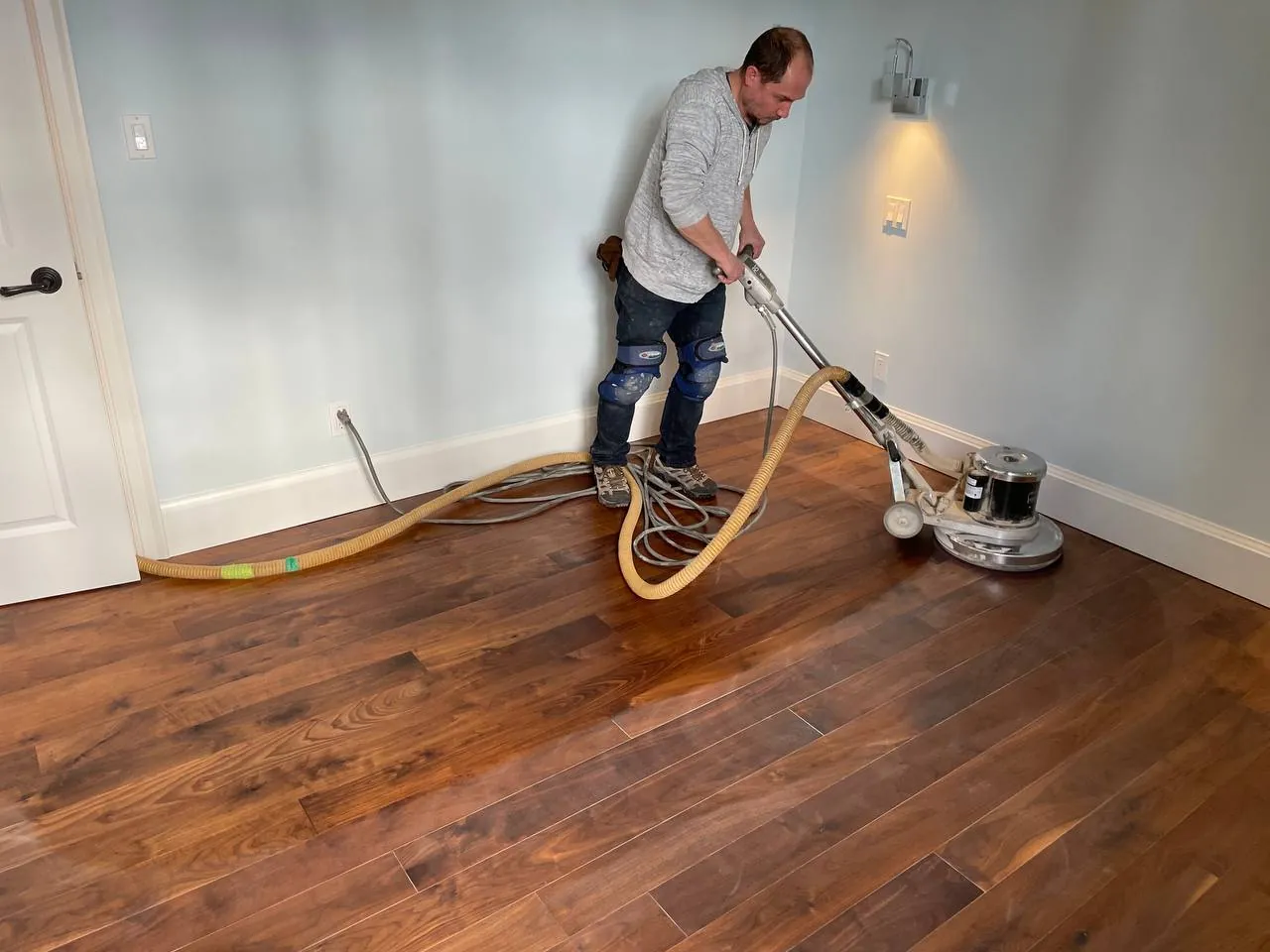

Hardwood flooring is one of the greatest features you can add to your home. Besides enhancing your home’s interior appeal, it can also add warmth and value. Besides, a hardwood floor is a lifelong investment. It can last for over a century. There is a big advantage to choosing it over other alternatives in that it can be repaired or refinished, making it really a long-term investment.
If at any stage you are confused whether to repair or refinish your hardwood flooring, this guide is for you.
Repairing Your Hardwood Flooring
You can repair your hardwood floor to fix specific areas that have been damaged. The process involves sanding the area and staining and finishing to maintain uniformity across the floor.
The main benefits of hardwood floor repair are as follows:
- Cost-Effectiveness: Wood floor repair is usually not as costly as refinishing, as it involves fixing specific areas.
- Faster Results: Repairs can mostly be completed in a short period of time.
- Less Disruption: You will usually need to repair only the affected areas. The rest of the floor is usable, thus minimizing disruption.
Signs Your Floor Needs Repair
Your hardwood floor may need repair if you notice the following issues:
- Scratches & Gouges: Scratches and gouges can be caused by factors such as moving furniture, high foot traffic, and pets. Deep scratches can be addressed only with professional floor repair to restore its finish.
- Cupping: If you notice the edges of the planks rising above the central area, moisture is usually the common cause. Cupping or warping should be immediately fixed to protect your floor’s structural integrity.
- Discoloration: A discolored floor can be a sign that there is a need for repair. Common underlying causes of discoloration include exposure to UV rays, water spills, and chemical exposure. A repair may be needed if you notice large discolored areas due to UV exposure or areas darkened by moisture.
- Gaps: Minor gaps caused by seasonal changes in moisture are normal. However, when the gaps between boards do not subside in the summer, your floor may need repair.
Refinishing Your Hardwood Flooring
A refinishing job involves sanding your floor to bare wood and applying a new stain and finish. It is a thorough process where the focus is on restoring the original appearance of the floor while addressing the damage.
The key benefits of refinishing your hardwood floor are as follows:
- Restoring the Floor: A hardwood floor refinish can address damages and create a new and uniform look.
- Long-Lasting Results: Refinishing can help add more years to your floor’s life.
- Customization: The choice of stain color and finish provides you with the option to customize your floor’s look to your liking.
Signs Your Floor Needs Refinishing
The following signs should tell you when your hardwood floor needs refinishing:
- Dull Appearance: Everyday use and foot traffic can reduce your hardwood floor’s original shine over time. If your floor stays dull even after cleaning, you should consider refinishing it.
- Stains or Water Damage: Water damage can, at times, cause permanent stains. It may be required to sand down the area and apply a new finish to restore the look.
- Scratches & Gouges: Minor surface scratches can be addressed by polishing the surface. However, deep gouges will need refinishing.
Some of the additional signs that indicate a need for refinishing include sun damage and worn-out areas.
When choosing between repairing and refinishing your hardwood floor, it is important to consider the level of damage, your floor’s age and condition, your budget, and your desired outcome. If you are unsure at any stage, it is recommended to seek professional help.