

Anyone who has managed a traditional construction site knows how quickly a clean schedule can unravel. Three days of heavy rain soak framing lumber and halt concrete pours. A delayed electrical crew pushes drywall back by two weeks. Meanwhile, dumpsters fill with cut-off studs, damaged sheathing, and leftover piping while loan interest keeps ticking every morning.
Prefabricated construction tackles those chronic friction points by moving a large portion of the building process off the open job site and into a controlled manufacturing facility. Today’s prefabrication reaches far beyond basic modular trailers or simple roof trusses. Builders across the United States routinely install panelized exterior walls, precast concrete slabs, structural steel assemblies, multi-trade mechanical racks, and fully finished bathroom pods in everything from multifamily apartments and hotels to hospitals and commercial offices.
When integrated early into a project’s design, prefabricated components reshape timelines, cost reliability, safety, and long-term building performance.
Faster Schedules Through Parallel Workflows
On a conventional stick-built project, construction unfolds mostly in a straight line. Crews finish excavation and pour the foundation, wait for framing, rough in plumbing and wiring, and then close up the walls. Every delay near the start ripples straight through to opening day.
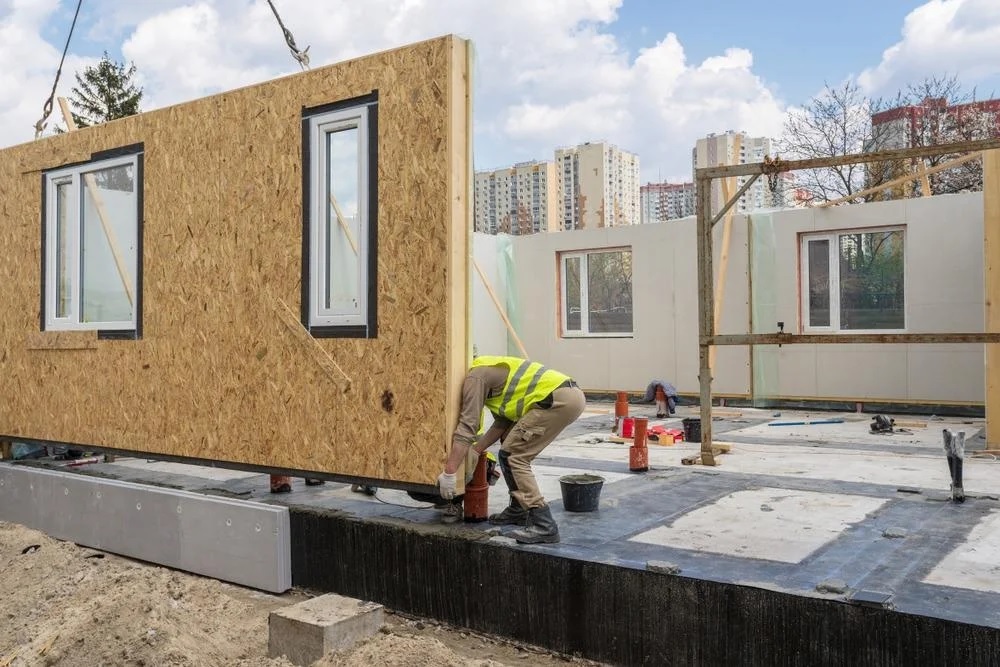
Prefabrication breaks that bottleneck by allowing site preparation and building fabrication to happen at the exact same time. While earthwork crews grade the land and pour footings outdoors, factory teams are already framing wall panels, installing windows, and assembling mechanical corridors indoors. By the time the foundation cures, major sections of the structure arrive on flatbed trucks ready to be craned into place.
Weather stops dictating the calendar, too. Wind, freezing temperatures, and summer storms rarely interrupt an indoor production floor. For commercial developers, school districts, and healthcare systems, shaving weeks or even months off a project timeline delivers concrete financial value. Owners spend less on construction loan interest, carry lower site overhead, and begin generating revenue or serving the public much earlier.
Tighter Quality Control and Manufacturing Precision
Building outdoors exposes raw materials to unpredictable humidity, rain, and temperature swings. Damp lumber warps as it dries, leading to nail pops, uneven drywall seams, and sticking doors months after handover.
Factory production removes those variables. Components are built in climate-controlled environments using precision jigs, laser-guided layouts, and computer-controlled cutting equipment that hold tolerances far tighter than hand-measuring on uneven ground. Inspections happen at dedicated checkpoints along the assembly line rather than hastily on ladders or scaffolding, making defects much easier to spot and correct before anything ships.
That precision pays off long after construction wraps up. Factory-built exterior wall panels typically feature tighter air barriers, consistent insulation coverage, and cleaner window flashing. The result is a more durable thermal envelope that lowers ongoing heating and cooling costs and reduces moisture intrusion problems over the life of the building.
Stronger Budget Predictability and Less Material Waste
Cost overruns are one of the biggest headaches in modern construction, often driven by fluctuating material prices, unexpected rework, and overtime hours spent catching up after site delays. Prefabricated components introduce manufacturing discipline to project budgets.
Locking In Costs Early
Because fabrication facilities purchase lumber, steel, fixtures, and fasteners in high volume, they frequently secure steadier pricing than a contractor ordering materials piecemeal for a single address. Just as important, factory production forces design teams to resolve dimensions, utility penetrations, and structural connections before fabrication begins. Catching conflicts on a digital model costs a fraction of what it costs to tear out newly installed ductwork and framing in the field.
Cutting Job Site Waste Dramatically
Walk past a standard residential or commercial build and you will see roll-off containers overflowing with wood scraps, broken gypsum board, and packaging. Much of that waste stems from rough field cuts, weather damage, and over-ordering to avoid running short.
In a prefab facility, automated cut lists optimize every sheet of plywood and length of steel. Leftover pieces that would be tossed into a landfill on a job site are sorted and reused on the next assembly or sent directly to recycling streams. Fewer ruined materials and dramatically lower dumpster hauling fees benefit both the project budget and sustainability goals.
Safer, Cleaner, and Less Disruptive Job Sites
Construction remains one of the most physically demanding and hazardous industries in the country, with falls from height and struck-by incidents leading injury statistics year after year. Prefabrication shifts thousands of labor hours away from elevated scaffolding, narrow trenches, and exposed rooftops onto well-lit factory floors with ergonomic, waist-high workstations and overhead hoists.
Once components reach the project site, installation requires smaller field crews working for shorter periods. Fewer trades stacked on top of one another reduces site congestion, improves coordination, and lowers accident risk.
That streamlined footprint matters enormously on tight urban lots or active campuses. Expanding a hospital wing, renovating a university dorm, or building an infill apartment complex near busy streets becomes far less disruptive when heavy cutting, welding, and assembly happen miles away. Neighbors deal with fewer delivery trucks, less airborne dust, and shorter periods of heavy equipment noise.
Easing the Pressure of Skilled Labor Shortages
General contractors across the country continue to wrestle with a shrinking pool of veteran carpenters, plumbers, electricians, and sheet metal workers. Relying solely on traditional field labor makes staffing complex builds harder and more expensive every year.
Prefabrication helps bridge that workforce gap in two practical ways. First, indoor manufacturing centers offer steady year-round schedules, predictable commutes, and comfortable working conditions that attract skilled tradespeople who might otherwise leave demanding field work. Second, assembling complex systems like electrical rooms or plumbing walls in a repeatable factory setting allows experienced technicians to oversee standardized tasks efficiently, multiplying what a smaller field crew can accomplish during installation.
Knowing Where Prefabrication Fits Best
Prefabricated components are not an automatic cure-all for every building challenge, and getting the full benefit requires adjusting how a project is planned. Projects with repeatable layouts—such as hotels, student housing, apartment buildings, medical clinics, data centers, and distribution warehouses—typically see the highest return, because design investments spread across dozens or hundreds of identical units.
Success also demands early discipline from owners and architects. Once panels or mechanical pods enter production, last-minute floor plan changes become expensive and slow. Project teams must also plan transportation routes, staging areas, and crane access well ahead of delivery day to make sure oversized assemblies can actually reach the site smoothly.
When owners commit to early coordination, prefabrication stops feeling like an experimental shortcut and starts acting like a smarter standard for building. By pairing architectural creativity with factory-level reliability, builders deliver stronger structures on tighter timelines, with fewer budget surprises and far less wasted effort along the way.
Comments are closed.